


 Aug 25, 2026
 View:146
One-Stop Display Manufacturing: Simplify Multi-Venue Programs with Modular SEG Systems
Introduction
When an agency runs display programs across multiple trade shows, retail locations, or event venues, the production side can quietly become the biggest bottleneck. Graphics come from one vendor, frames from another, kitting from a third, and freight from a fourth — and your project manager is the only person stitching it all together. One-stop display manufacturing solves this by consolidating design, production, quality assurance, kitting, and logistics under a single accountable partner.
Fewer handoffs don't just mean less email. They mean faster approvals, more consistent brand execution from venue to venue, and a supply chain you can actually forecast. For a franchise of a dozen retail windows or a quarterly show calendar across three cities, that consistency matters enormously. It also sets the foundation for sustainability: when one team owns the full lifecycle, assets are designed to be reused and redeployed rather than discarded after a single event.
The biggest operational shift inside that model is the move toward modular silicone edge graphic (SEG) systems. Lighter aluminum frames and fabric faces ship in fewer, smaller cases, cut freight and drayage, and install in minutes with no tools. Read on for how a one-stop model delivers that speed, and how to pick a partner who can actually pull it off for your programs.
What One-Stop Manufacturing Covers
One-stop is not a marketing label — it is a genuine scope of ownership. Before you compare quotes, it helps to map exactly which stages a manufacturer controls and why each one removes friction from your workflow.
Lifecycle Scope and Ownership
A capable one-stop display manufacturer provides a single accountable workflow across design support, production, quality control, kitting, and delivery coordination. Industry sources describe this turnkey model as consolidating every stage "from design through completion," which gives you a single point of accountability instead of a chain of subcontracted vendors. When one team owns the process end to end, the classic failure points — a frame that doesn't match the graphic, a part that arrives late from a third party, mismatched color runs — become far less likely because nothing falls between the cracks.
This ownership matters most for agencies because you carry the client-facing risk. If a booth is missing a lightbox at load-in, the blame lands on the contractor, not the manufacturer's subcontractor. Consolidating ownership limits the number of moving parts your team has to track, which is precisely the relief multi-venue programs need.
Unified Approvals and QA
In a fragmented setup, every vendor runs its own approval cycle, and quality differs across each shop. A one-stop manufacturer collapses approvals into a single unified flow: your team reviews the design once, the same team produces the sample, runs QA, and signs off before packaging. Because production, inspection, and finishing happen under one roof, tolerances stay consistent and the final units match the approved sample.
For a manufacturer like Lintel Display, this shows up in verifiable discipline rather than vague promises — According to Lintel's internal production quality records, their continuous quality systems support a 99.47%+ pass rate across production. That kind of consistency is what lets an agency promise repeatable quality to clients across a whole program, not just one heroic show.
Centralized Kitting and Logistics
The last mile is often where cost and time bleed away. A one-stop model centralizes kitting — bundling frames, graphics, hardware, and accessories into ready-to-ship kits — so your program arrives at the venue complete rather than in scattered boxes that may or may not match up. Centralized logistics also means fewer carriers, consolidated shipments, and far less risk of a missing-part scramble on show morning.
The efficiency compounds when the kits are built around modular designs. Because everything is accounted for in a single kit, a small crew can handle setup, and the same kit is sized to travel again to the next venue — a detail we'll return to next.
Why the One-Stop Model Matters for Multi-Venue Programs
The value of one-stop manufacturing is easier to see with numbers. The benefits that matter most to agencies in 2025 and 2026 are faster turns, lighter freight, more reusable systems, and clearer sustainability.
Faster Turns and Lighter Freight
Time-to-install is a direct function of how much you're shipping and how it assembles. Heavy, rigid signage means palletized freight, drayage surcharges, and specialist labor on the floor. Modular SEG systems flip that equation.
Trade-show observers note that industry sources point to drayage adding 40% to 60% to total show costs, and lighter systems are the direct lever on that exposure. Fabric graphics weigh a fraction of rigid panels and fold down into compact kits where rigid signage needs pallets. Less weight and fewer cases mean cheaper freight, less storage, and a faster, tool-free setup that any crew member can handle.
Lintel Display's own guidance on reducing shipping and storage costs makes the same point: lighter modular booths lower both freight and the drayage fees that can inflate a program's cost. For an agency running quarterly shows, that saving reappears on every single deployment — a durable margin win, not a one-off discount.
Modular SEG Frames and Lightboxes
Modular SEG frames are where the one-stop model meets its most reusable hardware. Silicone edge graphics pop into grooved aluminum frames for wrinkle-free, flush tension, and they swap out in seconds when a campaign changes — without rebuilding the frame. That reusability is the difference between buying a display once and buying a new one every show.
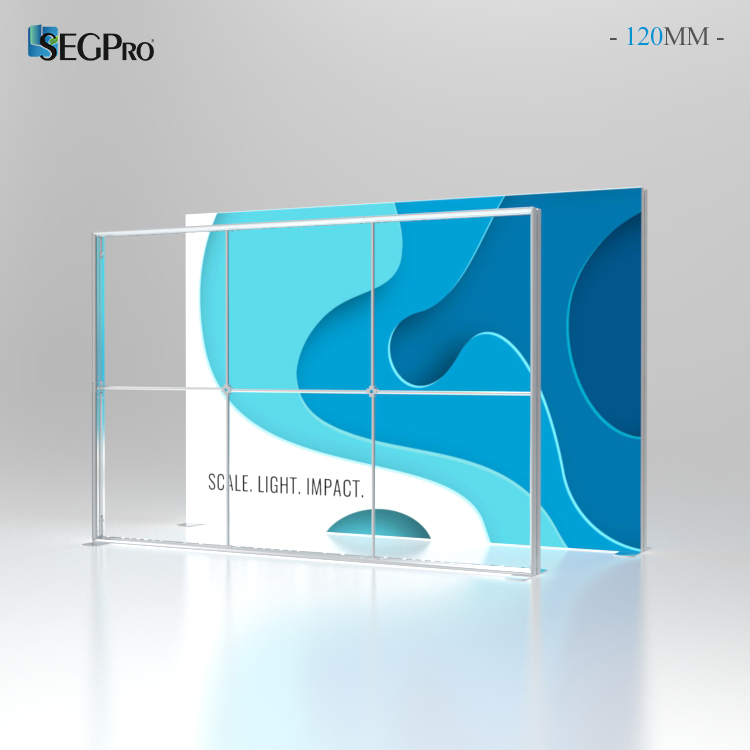
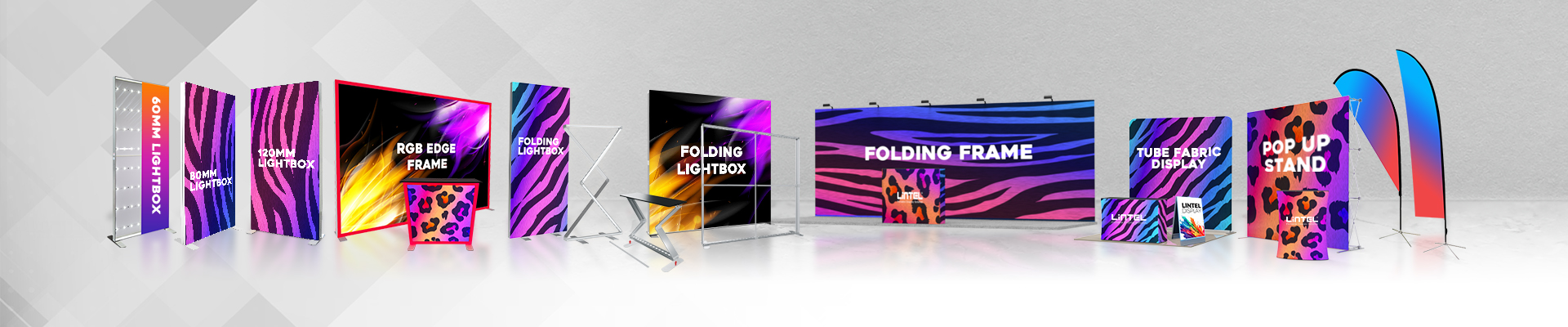
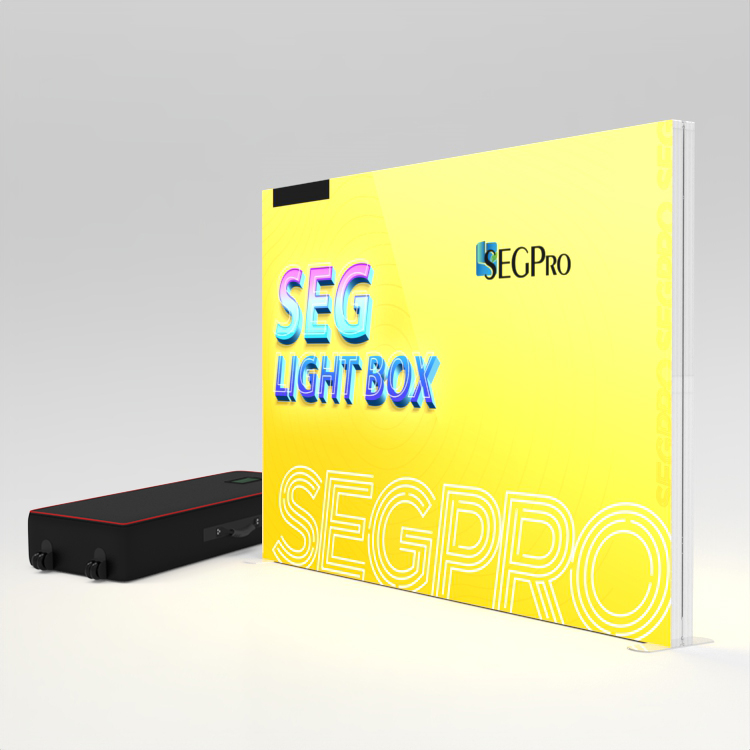
This is where Lintel Display's modular systems — SEGPRO® lightbox systems, CHROMIX™ RGB LED frames, and XQUIC™ folding SEG frames — fit naturally into an agency toolkit. SEGPRO® lightboxes deliver high-brightness, edge-lit illumination in modular kits that install without tools. CHROMIX™ extends that into color-changing RGB LED frames for environments that need to shift ambience. XQUIC™ frames push the assembly step out of the way entirely with tool-free, folding designs that a two-person crew can stand up in minutes.
The operational upside for agencies is real, not aesthetic. Because the frames are reusable and the graphics are replaceable, your client owns a kit that travels from show to show. You change the fabric, keep the frame, and your recurring production cost drops toward printing alone — while the reusable, tool-free SEG frames hold their value across a multi-venue program.
Sustainability and Digital Integration
Sustainability in multi-venue display programs is increasingly tied to reuse, standardization, and lifecycle planning rather than one-time material choices.
Modular SEG systems support this approach by separating the long-life structural components from the campaign graphics. Aluminum frames, connectors, lighting components, and accessories can remain in service across multiple events or retail activations, while SEG graphics are replaced only when the message changes.
This reduces the need to rebuild complete display structures for every program and can also simplify inventory planning, storage, and redeployment.
For larger display programs, the practical sustainability questions are therefore:
How many times can the frame be reused?
Can graphics be replaced independently?
Are damaged components replaceable without discarding the full system?
Can the same hardware support different layouts?
How efficiently can the system be packed, stored, and redeployed?
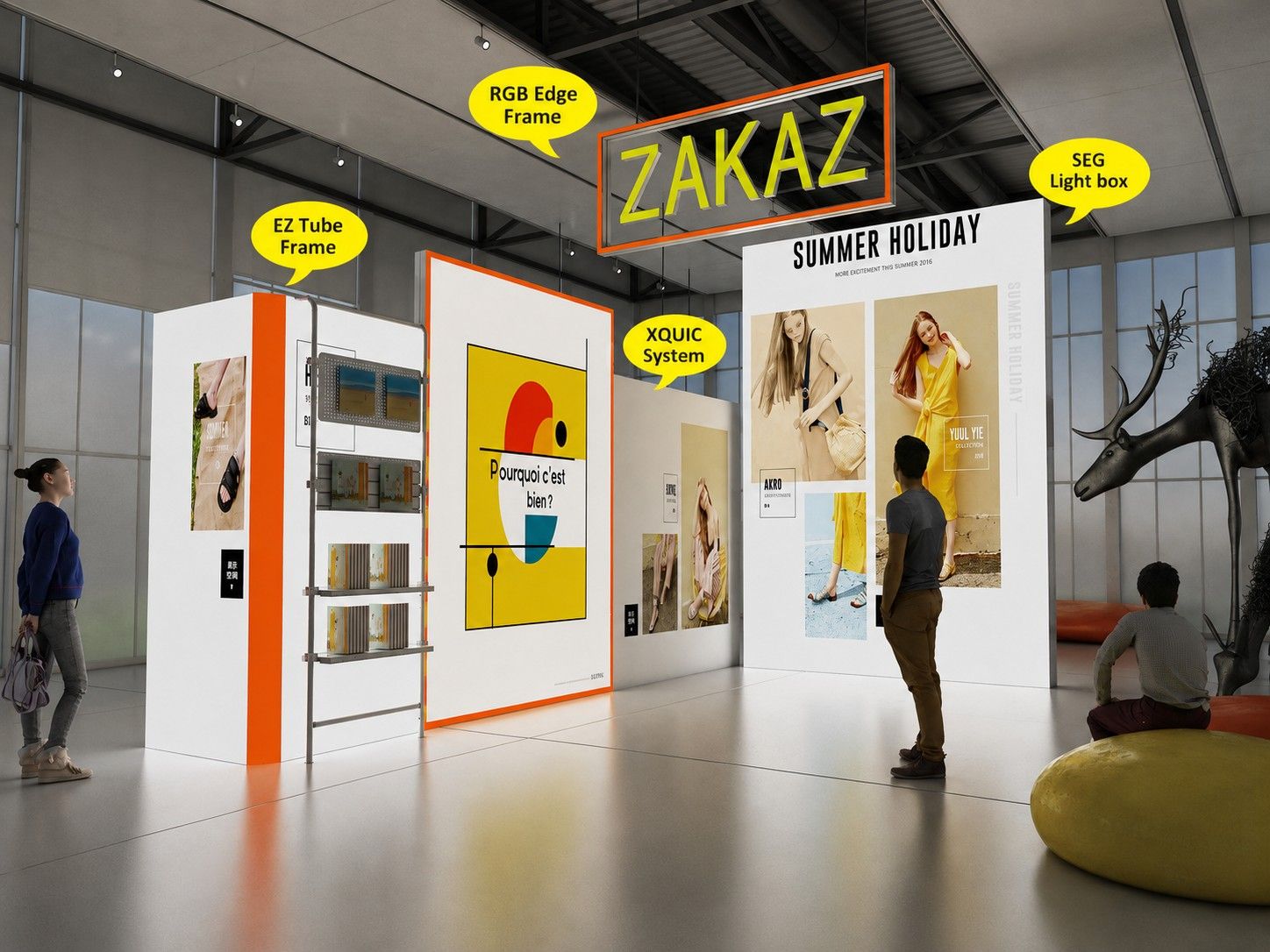
Digital elements can extend that flexibility further. Screens, monitor brackets, RGB lighting, and other integrated media components allow the same physical display structure to support different campaigns without major structural changes.
The result is a display platform that can evolve from one venue to the next while keeping more of the original hardware in use.
How to Choose the Right Partner
Not every "one-stop" vendor delivers the full scope. Treat the label as a claim to verify, and evaluate partners against the criteria below before you commit a program to them.
End-to-End Capability and PM Rigor
Start by confirming the partner can actually execute the complete lifecycle in-house rather than brokering it. Ask for factory evidence — production-line videos, equipment details, certification copies — and a documented quality plan with inspection checkpoints. Strong partners also bring program-management (PM) discipline: a single accountable contact, proactive updates, and realistic, itemized lead times. Full-service display manufacturers that design, prototype, manufacture, and fulfill under one roof are the benchmark here, because vertical integration removes the coordination risk that fragments your program.
Modular/SEG Expertise and Regional Fulfillment
If you're standardizing on modular SEG and lightboxes — which this article's math favors — your partner should be a specialist, not a generalist who dabbled in one trade show. Look for proven modular frame lines, tool-free assembly, and replaceable graphic systems, plus the certifications (such as fire-compliance documents for fabric graphics) that matter in your venues. Regional fulfillment also counts: a partner with kitting and logistics that reach the venues you actually run saves freight and avoids customs or lead-time surprises. When a manufacturer demonstrates sustainable SEG lightbox systems built for reuse, you're getting both the technical capability and the sustainability story clients increasingly demand.
Red Flags and Next Steps
Some signals should end a conversation quickly. Be wary of vague capability claims with no factory proof, quotes that hide tooling or logistics costs, unverifiable or expired certifications, extremely low pricing with no explanation, and slow or evasive communication. Each is a reliable predictor of weak project management or hidden capability gaps.
To compare partners fairly, ask each for the same deliverable package: factory evidence, itemized quote, quality plan, sample policy, lead times, reference projects, and after-sales terms. Run it side by side, and the strongest candidate usually becomes obvious.
Looking for a reliable seg lightbox manufacturer?
Lintel Display the leading portable display company with the widest selection of eco-friendly solutions for events, exhibits, trade shows, retail environments, meeting and more. With 30 years of efforts and innovation, Lintel'products are covered to serve customers in 138 countries and regions around the world.
Request a Quote TodayConclusion
One-stop display manufacturing is valuable because it reduces operational complexity across the full project lifecycle.
When design support, production, quality control, graphics, kitting, packing, and delivery coordination are managed through one accountable workflow, there are fewer handoffs to manage and fewer opportunities for specifications, components, or timelines to fall out of alignment.
Combined with modular SEG systems, that control becomes even more valuable across repeat and multi-venue programs. Reusable frames, replaceable graphics, standardized components, and project-specific kitting make it easier to maintain consistent brand execution while reducing unnecessary rebuilding between locations.
The goal is not simply to buy displays from fewer vendors.
It is to create a more repeatable delivery model built around:
Standardized specifications + controlled quality + efficient kitting + reusable display assets
When evaluating a manufacturing partner, look beyond the product catalog. Confirm who controls the critical production stages, how quality is documented, how kits are organized for each destination, how replacement parts are managed, and whether the display system can support future deployments without starting over.
For multi-venue programs, that level of operational control can be more valuable than a lower unit price.