


 Jul 29, 2026|
 View:174
How to Reduce Interstate Shipping Costs for Australian Trade Shows
Exhibiting across Australia is expensive, and shipping is often the hidden budget killer. From Sydney to Melbourne, Brisbane to Perth, the distances are vast—and so are the freight bills. With the average exhibitor spending $2,000–$5,000 on freight transportation alone, and total shipping and handling costs for a mid-size booth often landing between $3,000 and $10,000 per show, reducing interstate shipping costs is a competitive necessity. This guide shows Australian exhibition companies, advertising agencies, printers, and rental operators exactly how to cut those costs without sacrificing professional impact.
Key Takeaways
Exhibitors underestimate trade show costs by 20% or more – accurate freight budgeting is essential
Shipping costs depend on weight and volume – reducing either cuts your bill
Modular aluminium systems weigh 30–50% less than custom timber or steel stands
Compact packing reduces cubic volume – the second biggest factor in freight pricing
Lighter stands mean lower drayage fees – material handling is charged by weight
Exhibiting multiple times per year amplifies shipping savings
Standard courier services can replace expensive freight with lightweight modular systems
1. Why Are Australian Interstate Shipping Costs So High?
Australia’s geography presents a unique logistics challenge. The major exhibition cities – Sydney, Melbourne, Brisbane, Perth, and Adelaide – are separated by vast distances. A full truckload (FTL) from Sydney to Brisbane costs approximately $1,417, Melbourne to Sydney around $1,470, and Sydney to Perth approximately $3,150.
Australian freight networks routinely move goods 2,500–4,000 km interstate. At road freight rates of $1.00 to $2.50 per kilometre, these distances add up quickly.
The hidden costs don’t stop at freight. Drayage – the fee charged by the show’s logistics contractor to move your booth from the loading dock to your exhibit space – is calculated based on total weight. Drayage rates typically range from $90 to $200+ per hundredweight (CWT), with one CWT equalling 100 pounds. A heavy custom stand weighing 1,000 pounds can cost $900–$2,000 just to move from the dock to your booth within the same building.
Shipping accounts for approximately 9% of the total exhibit budget, according to Cvent’s 2025 event data. Freight is often one of the biggest hidden costs for Australian exhibitors.
2. How Can You Cut Freight Costs by 30–50%?
Strategy 1: Choose Lightweight Materials
Traditional custom stands built from timber, MDF, or steel are heavy and expensive to ship. Freight providers calculate pricing based on both weight and volume – heavier and bulkier shipments cost more. By contrast, modular exhibition stands use precision-engineered aluminium frames that provide exceptional structural strength while remaining significantly lighter than steel or timber alternatives.
The weight reduction is substantial. Modular exhibition stands are engineered with lightweight aluminium frames and tension fabric graphics, offering reduced total shipment weight and lower air cargo charges. An aluminium frame system can weigh 30–50% less than a comparable custom build. Every kilogram saved translates directly into lower freight charges, easier manual handling, and reduced need for mechanical lifting equipment.
Strategy 2: Reduce Cubic Volume
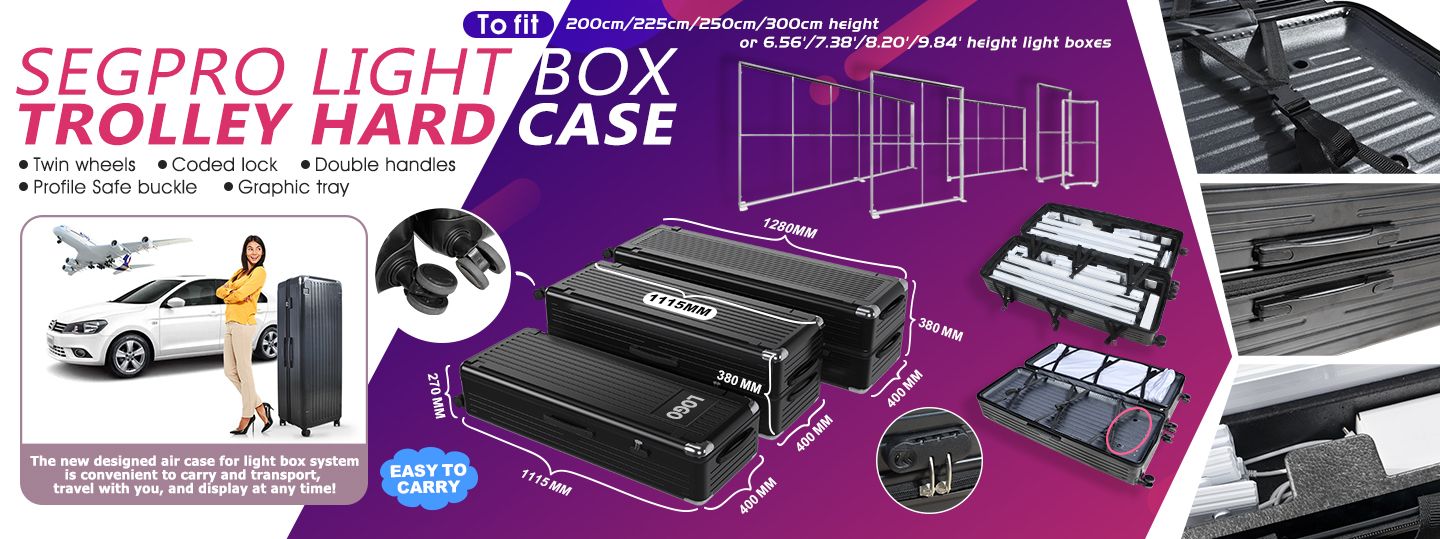
Weight is only part of the equation – cubic volume plays an equally important role. Modular systems are designed to pack down into compact cases. The frame sections break apart into manageable components, while tension fabric graphics fold neatly without cracking or warping. This means the entire system fits into wheeled carry bags, protective hard cases, or stackable cartons.
Compact packing delivers three cost-saving benefits: more efficient pallet use, lower cubic metre freight costs, and easier coordination with exhibition logistics providers. Reduced cubic size means more efficient freight pricing and easier storage between events.
3. Why Does Packaging and Transport Mode Matter?
Strategy 3: Choose the Right Transport Mode
Exhibitors generally choose between two modes for origin freight:
| Transport Mode | Cost Range | Best For |
|---|---|---|
| Standard courier/parcel | $200–$600 round trip | Small booths, banner stands, pop-ups |
| LTL freight | $600–$2,000 round trip | Mid-size modular booths |
| Dedicated truck | 30–50% more than LTL | Large island exhibits, urgent shipments |
For Australian businesses exhibiting interstate, lighter freight means measurable savings over time. Many modular systems are compatible with standard courier services, eliminating the need for expensive freight handling equipment. Because the components break down into manageable sections, they fit neatly into compact carry bags or cases – reducing courier and freight costs and making airline check-in easier for interstate exhibitions.
Strategy 4: Consolidate and Plan Ahead
For regular interstate movements, consolidation can reduce per-unit costs by around 20 to 40% when departures are scheduled to match shared delivery windows. Shipping multiple displays together or coordinating with other exhibitors can significantly reduce per-unit costs.
Forward planning is equally critical. Booking freight well in advance, consolidating shipments, and using the show’s official carrier network for LTL services all contribute to lower costs.
4. What Are the Hidden Costs and How Can You Avoid Them?
The Five Cost Layers of Trade Show Shipping
Most exhibitors budget for freight and are caught off guard by the other four layers:
| Cost Layer | Description | How to Reduce |
|---|---|---|
| Origin freight | Transport from facility to venue city | Use lightweight modular systems |
| Advance warehouse fees | Staging facility storage near venue | Ship closer to show dates |
| Drayage/material handling | Dock to booth space movement | Reduce weight to lower CWT charges |
| Show services | Electrical, internet, carpet, furniture | Budget separately |
| Return shipping | Transport after show closes | Pack efficiently for return |
How Modular Systems Reduce Hidden Costs
Modular systems reduce exposure to multiple cost layers:
Lower origin freight – lighter weight means lower charges
Lower drayage – drayage is labour- and equipment-intensive, and costs rise because of heavier or awkward crates. Lighter stands mean lower handling fees.
Lower advance warehouse fees – compact packing reduces storage space requirements
Lower return shipping – the same weight and volume savings apply on the return trip
The Risk of Transit Damage
Heavy and rigid structures are more prone to damage during transport. Cracked panels or bent frames can lead to costly repairs and stressful last-minute fixes. Modular aluminium frames are durable and resistant to corrosion, while fabric graphics are flexible and designed to withstand folding without permanent creases. Padded carry cases protect components during transit, reducing the likelihood of damage and helping maintain a professional appearance at every event.
5. What Are the Long-Term Savings for Australian Exhibitors?
If you attend several exhibitions each year, shipping advantages compound over time:
| Annual Shows | Modular Shipping Savings (Est.) |
|---|---|
| 1 show | $200–$600 |
| 3 shows | $600–$1,800 |
| 5 shows | $1,000–$3,000 |
| 10 shows | $2,000–$6,000 |
*Estimated savings based on typical modular vs custom shipping cost differences
Choosing a compact and lightweight system helps you lower annual freight expenses, reduce storage costs, avoid repeated repair fees, and streamline exhibition planning.
Even more compelling: a purchased custom stand at $8,000 pays back versus hiring after 3–4 events. Modular systems, with their lower shipping costs and reusability, offer an even faster payback for frequent exhibitors.
Shipping savings have a real impact on your overall marketing budget when you exhibit multiple times per year.
Frequently Asked Questions
How much can I really save by switching to a lightweight modular display system?
Typical savings range from $200 to $600 per show on freight alone, with additional savings on drayage, storage, and handling fees. Over five shows, savings can exceed $2,000.
What’s the difference between freight and drayage?
Freight is the cost of transporting your booth from your location to the venue city. Drayage is the fee charged by the show’s contractor to move your freight from the venue loading dock to your exhibit space – and back again. Drayage is charged by weight.
Can I use standard courier services instead of freight for my modular display?
Yes. Many modular systems pack into compact cases that are compatible with standard courier services, eliminating the need for expensive freight handling equipment.
Does packing volume affect shipping costs as much as weight?
Yes. Freight providers calculate pricing based on both weight and volume. Compact packing reduces cubic volume, which directly lowers freight charges.
How can I reduce drayage costs?
Reduce the total weight of your display. Drayage is calculated per hundredweight (CWT). Lighter stands mean lower drayage fees. Loose or non-palletized items and mislabelled freight also increase handling costs.
What’s the best transport mode for interstate exhibitions?
For small to mid-size modular booths, LTL freight or even standard courier services often suffice. For large island exhibits, dedicated truck services offer greater reliability but cost 30–50% more.
Conclusion: Ship Smarter, Exhibit Stronger
Reducing interstate shipping costs for Australian trade shows is achievable through four key strategies: choosing lightweight modular aluminium systems, reducing cubic volume through compact packing, selecting the right transport mode for each show, and consolidating shipments where possible. The savings are substantial – and they compound with every show.
With over 2,259 exhibition and conference centres across Australia and thousands of exhibitors shipping interstate each year, the opportunity to reduce logistics costs is significant. The Australian business events industry draws over 9.3 million participants annually, and shipping remains one of the largest hidden costs.
Lintel Display has manufactured portable display solutions for over 30 years. Our modular light box systems – with lightweight 120mm aluminium profiles and compact packing that fits into wheeled carry cases – are designed specifically for exhibitors who need to ship interstate without paying premium freight rates. B1 fire-rated fabrics and CE/UL certified electronics meet Australian exhibition hall safety standards.

Ready to cut your interstate shipping costs?